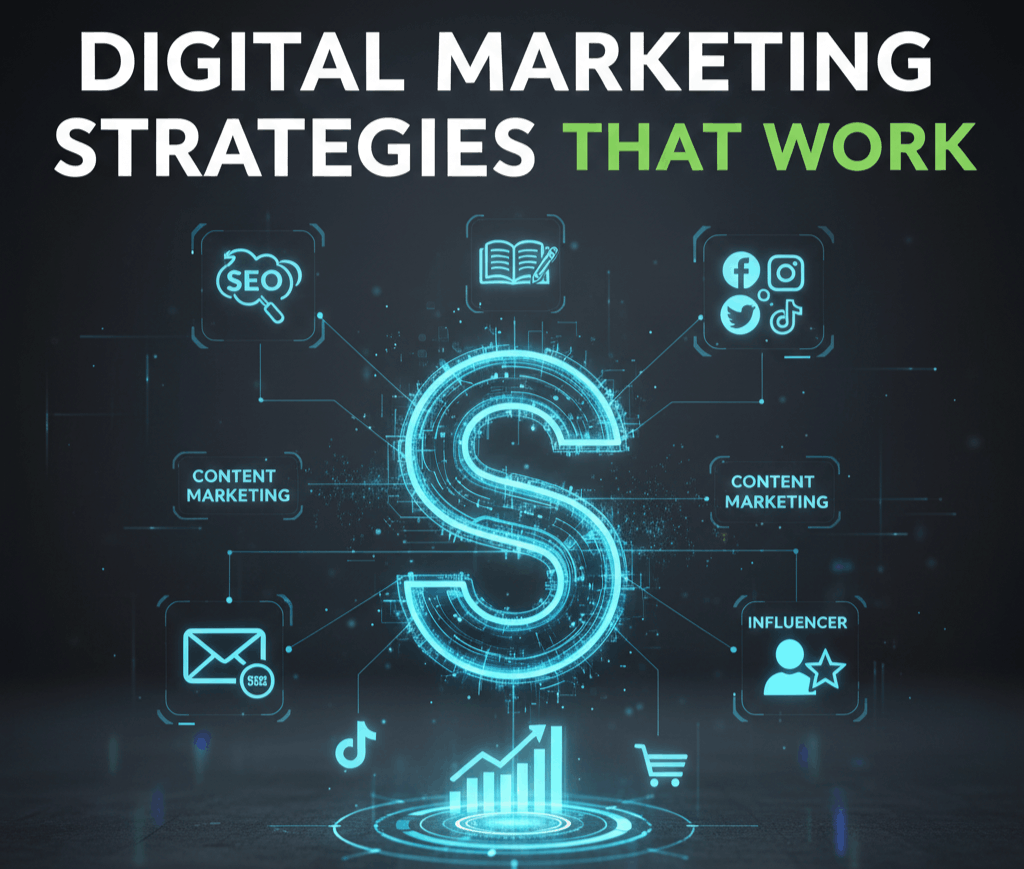

Here’s a number that should stop you mid-scroll: global digital ad spend is projected to exceed $740 billion in 2026, according to Statista. That’s not a typo. And yet, most businesses I talk to are still spreading their budget across channels like they’re tossing seeds out a car window—hoping something grows.
I’ve spent the last decade managing digital marketing channels for brands ranging from bootstrapped startups to mid-market SaaS companies. And if there’s one thing I’ve learned, it’s this: the best digital marketing strategies in 2026 aren’t about being everywhere. They’re about being ruthlessly strategic about where you show up and how. In this guide, I’ll walk you through the seven channels that are actually driving results right now—with real data, honest takes on what’s changed, and a few opinions that might surprise you.
Page Contents
What Are Digital Marketing Channels?
Digital marketing channels are the online platforms and strategies businesses use to reach, engage, and convert their target audience. These include search engine optimization (SEO), pay-per-click (PPC) advertising, social media marketing, content marketing, email marketing, influencer partnerships, and video marketing. In 2026, effective digital marketing channels are increasingly powered by AI-driven personalization, automation, and cross-channel data integration—making an omnichannel strategy essential rather than optional.
AI-Driven Digital Marketing Strategy 2026
If 2025 was the year AI went mainstream in marketing, 2026 is when it became the operating system. According to a CMO Survey from Duke University’s Fuqua School of Business, generative AI adoption in marketing surged 116% year-over-year, now touching 15.1% of all marketing activities. And 88% of marketers report using AI tools daily—not as a novelty, but as a core part of their workflow. The global AI marketing industry sits at roughly $47 billion and is growing at a 36.6% compound annual rate.
But here’s what most people get wrong about AI in marketing: it’s not replacing strategy. It’s amplifying it. The teams I’ve seen win this year aren’t the ones with the fanciest AI stack—they’re the ones who use AI to automate the repetitive stuff (bidding, segmentation, A/B testing at scale) while doubling down on human creativity for messaging, brand voice, and storytelling. That’s the real best digital marketing strategy for 2026: use machines for speed, and humans for meaning. Companies like Acroan have been helping brands find exactly that balance, integrating AI workflows into existing marketing operations without losing the human touch that drives genuine connection.
1. SEO and PPC Marketing Channels: How I Think About Search in 2026
SEO Is Not Dead—But It’s Definitely Different
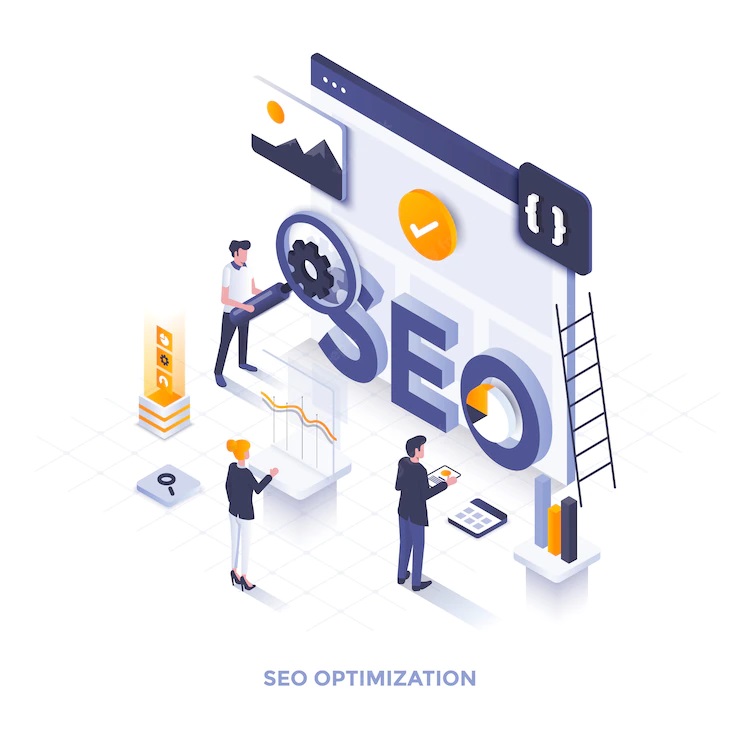
Let’s kill the “SEO is dead” narrative right now. According to HubSpot’s State of Marketing 2026 report, website, blog, and SEO efforts remain the number-one ROI-generating channel, with 27% of marketers ranking it at the top. That’s ahead of paid social, email, and everything else.
What IS different? Google’s AI Overviews now appear in a growing share of searches. Semrush estimates around 13% and rising. By late 2025, Google was actively pushing users from AI Overviews into AI Mode for follow-up queries, which means more answers without clicks. The old playbook of stuffing keywords into a 2,000-word blog post and waiting for traffic? That’s over.
What works now is what Google calls “helpful content”—articles that demonstrate genuine experience, expertise, authoritativeness, and trustworthiness (E-E-A-T). Thin, repetitive content continued losing ground throughout 2025’s core algorithm updates. My advice: write for humans who happen to use Google, not for Google’s crawlers.
What About PPC? Still Worth It?
Short answer: absolutely, but with caveats. Google still holds nearly 40% of the total paid search market. Users who click PPC ads remain 50% more likely to convert than organic visitors. But here’s the shift: Performance Max, Meta Advantage+, and TikTok’s predictive ad tools have turned paid campaigns into AI-driven learning machines. You’re no longer manually picking audiences—you’re feeding algorithms creative assets and letting machine learning find your buyers.
The smartest PPC marketers I know in 2026 are spending more time on creative testing than on audience targeting. Why? Because the algorithms handle targeting now. Your job is giving them better raw material. That’s a fundamental shift in how SEO and PPC marketing channels work together.
2. Social Media Marketing for Business: Where to Actually Show Up
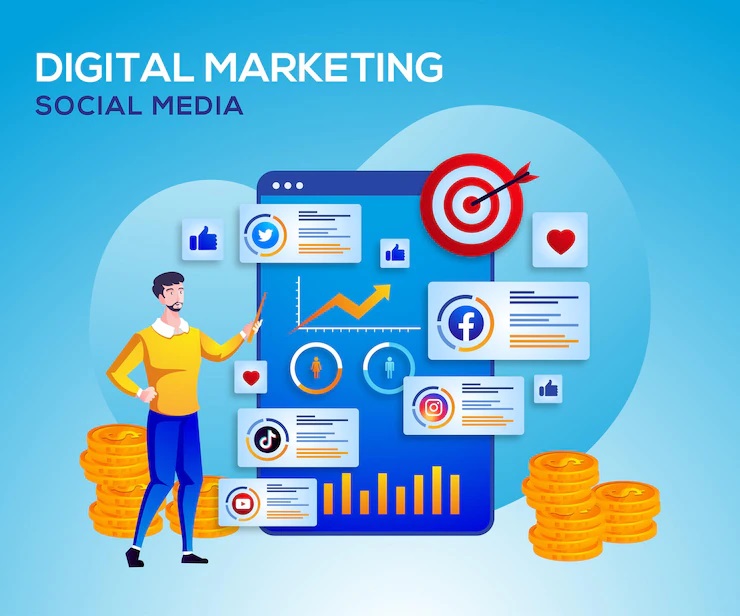
There are now over 5.24 billion social media users worldwide—about 64% of the global population. But more users doesn’t mean more engagement. User engagement actually fell across most platforms in 2025. People are scrolling more selectively. That’s a challenge. It’s also an opportunity.
So which platforms matter most? According to HubSpot’s 2026 data, TikTok is the social media channel most marketers plan to use the most, and short-form video delivers the highest ROI of any media format—48.6% of marketers rank it in their top three for performance. Instagram has crossed three billion monthly users and remains the most-used platform among marketers (70%). LinkedIn is quietly becoming the MVP for B2B—42% of marketers now use it, up 11% from the prior year, and more marketers identify it as delivering the best results than any other social channel.
Here’s my honest take: if you’re a B2B company, go all-in on LinkedIn and YouTube. If you’re B2C, TikTok and Instagram Reels should eat a meaningful portion of your content budget. Stop cross-posting the same content everywhere. Platform-native content wins in 2026. Your 25-year-old customer on Instagram at midnight wants entertainment, not a thought leadership essay—save that for LinkedIn.
Social Commerce Is No Longer Optional
Social commerce—buying directly inside the social feed without visiting an external site—became one of the most impactful channels in 2025 and is accelerating. For B2C brands, this shortens the funnel dramatically. Even B2B companies are seeing results: 21.9% of B2B marketers now say social shopping is a top-performing channel. If you haven’t enabled shopping features on Instagram, TikTok, or Facebook, you’re leaving money on the table.
3. Email Marketing ROI: The Quiet Monster Nobody Talks About

This might be the most underrated section of this entire article. Email marketing generates between $36 and $42 for every dollar spent, according to multiple industry sources including Litmus and HubSpot. That’s a 3,600% to 4,200% return on investment. No other digital marketing channel comes close consistently.
There are now 4.73 billion email users worldwide in 2026. Some 99% check their inbox daily. And here’s a stat that surprised even me: automated email flows now drive 37% of all email-generated revenue despite being just 2% of total sends. Welcome emails alone hit 80% average open rates. Abandoned cart emails? Over 50%.
The email marketing ROI story gets even better with AI. AI-driven personalization now boosts revenue by 41% and click-through rates by 13.44%. Brands that A/B test every email see ROIs 37% higher than those that never test. If you’re still sending the same generic newsletter to your entire list, you’re essentially burning money.
Sound familiar? Here’s what to do instead: segment ruthlessly. Build automated flows for welcome sequences, post-purchase follow-ups, and win-back campaigns. Personalize subject lines (emails with personalized subjects are 27% more likely to be opened). And for the love of your bottom line, optimize for mobile—41% of all email views come from mobile devices, and that number climbs to 75% for Gmail users.
4. Content Marketing Strategy That Actually Converts
Content marketing is having an identity crisis in 2026. The global content marketing industry is projected to hit around $107.5 billion in revenue this year. Everyone’s producing content. That’s precisely the problem.
The days of churning out generic blog posts and hoping for organic traffic are finished. What’s working now? Integration beats volume. Strong content in 2026 is intentional, cross-channel, and tied to a clear business objective. Not every piece needs to exist. Every piece needs a reason.
Here’s a content marketing strategy framework I’ve used with clients that consistently outperforms:
- Short-form video first: It’s the top media format marketers are investing in for 2026. Blog posts fuel SEO, but video builds trust faster.
- Repurpose everything: High-performing teams use AI to turn a single video into Reels, Shorts, email snippets, and chatbot scripts. HubSpot found that 74% of top-performing teams do this systematically.
- Storytelling over information dumps: Memorable content comes from narrative, perspective, and progression—not from exhaustive 5,000-word explainers nobody finishes.
- User-generated content (UGC): Consumers trust other customers more than they trust brands. In 2026, audiences demand authenticity and real connection.
One more thing: about 94% of marketers plan to use AI in their content creation processes this year. That’s fine—use AI for drafts, outlines, and variations. But the content that ranks and resonates still needs a human voice, real experience, and genuine insight. Google’s March 2025 core update reduced low-quality content visibility by 45%. The message is clear.
5. Influencer Marketing and Video: The Channels Your Competitors Are Quietly Scaling
The global influencer marketing market surpassed $32 billion in 2025, according to Influencer Marketing Hub. That’s not a side hustle—it’s a core performance channel. But there’s a catch. Consumer trust in influencer content is starting to erode. People recognize paid placements, and AI-generated influencers are adding another layer of skepticism.
The brands winning with influencer marketing in 2026 are focusing on long-term partnerships with micro-influencers (10K–50K followers) rather than one-off deals with mega-influencers. Micro-influencers consistently deliver higher engagement rates and feel more authentic. Think of it less as advertising and more as relationship building.
Video marketing, meanwhile, continues its absolute dominance. A 2025 Deloitte Insights survey confirmed that social-video platforms have fundamentally reshaped consumption habits, with audiences moving from passive scrolling to interactive engagement. Nearly 58% of consumers now use voice search for general web queries, and video content is increasingly surfaced in these results. If you’re not investing in video—especially short-form vertical video—you’re invisible to an entire generation of buyers.
6. Voice Search and Answer Engine Optimization: The Emerging Frontier
Search is no longer just Google and keywords. In 2026, search is embedded in AI chat interfaces (ChatGPT, Perplexity, Claude), voice assistants, smart home devices, and social media platforms. Google AI Overviews now appear in 16% of all U.S. searches—more than double March 2025 levels. And when they appear, they reduce traditional website clicks by 34.5%.
This is where Answer Engine Optimization (AEO) comes in. AEO is the practice of optimizing your content so AI engines can cite it in their generated responses. How? Write clear, standalone answer paragraphs. Include proper attribution and sourcing. Maintain high fact density. Structure content in clear hierarchies with direct question-answer pairs. Think of every H2 and H3 section as a potential AI snippet.
Wait—let me back up. Does this mean SEO is being replaced? No. AEO is an addition to your SEO toolkit, not a replacement. The brands that show up in both traditional search results and AI-generated summaries will have an enormous visibility advantage. That’s the double win you should be building toward.
7. Why Omnichannel Integration Is the Real “Strategy”
Here’s the kicker: no single digital marketing channel wins alone anymore. According to HubSpot’s 2026 report, teams using integrated “Loop Marketing” principles—where channels, content, and customer insights feed into a self-optimizing engine—are 2.3x more likely to report above-average ROI. Most successful brands are now running five to eight channels simultaneously, and 73% of high-performing B2C teams use intent-based audience segmentation across all of them.
The question is no longer “which channel should I pick?” It’s “how do I make all my channels work together?” Your SEO feeds your content marketing. Your content fuels your social media. Social drives email signups. Email nurtures leads into buyers. Paid amplifies your winners. Each channel reinforces the others. That’s the system. Build the system.
Frequently Asked Questions
Q: Which digital marketing channel has the highest ROI in 2026? A: Email marketing consistently delivers the highest ROI, averaging $36–$42 for every dollar spent (3,600–4,200% return). SEO is the top ROI-generating channel overall when factoring in organic traffic value. Your best bet is combining both.
Q: How is AI changing digital marketing channels? A: AI now powers daily workflows for 88% of marketers. It automates PPC bidding, personalizes email content at scale, generates creative variations for social, and enables Answer Engine Optimization. The key is using AI for efficiency while keeping human creativity for strategy and storytelling.
Q: Is SEO still worth investing in with AI search? A: Yes. Over 93% of marketers plan to maintain or increase SEO investment in 2026. While AI Overviews reduce some clicks, SEO content that gets cited by AI engines gains massive new visibility. Optimize for both traditional search and AI-generated summaries.
Q: What social media platform should I focus on in 2026? A: It depends on your audience. TikTok leads in planned marketer usage and short-form video ROI. Instagram is the most-used platform overall. LinkedIn is the strongest performer for B2B. Pick two or three platforms where your audience actually spends time rather than trying to be everywhere.
Q: How much should I spend on digital marketing? A: Average marketing budgets sit at 7.7% of company revenue, according to Gartner’s 2024 CMO Spend Survey. Within that, prioritize the channels where you can demonstrate measurable ROI. Start small, test, and scale what works. Email and SEO tend to deliver the best returns for limited budgets.
Q: What is Answer Engine Optimization (AEO)? A: AEO is the practice of optimizing content for AI search engines like ChatGPT, Perplexity, and Google’s AI Overviews. It involves writing clear, citable answers, maintaining high fact density, using proper attribution, and structuring content so AI can extract and reference it in generated summaries.
The Bottom Line
After a decade of managing digital marketing channels across industries, here’s what matters most in 2026:
Pick your channels based on data, not trends. Email and SEO still deliver the highest returns. Short-form video is the fastest-growing format. Social commerce is closing the gap between discovery and purchase. And AI is the engine underneath all of it—not the strategy itself.
Build an integrated system, not a collection of disconnected tactics. The brands winning right now treat their channel mix as a flywheel where each piece amplifies the others.
And never forget that behind every click, open, and conversion is a real person. The technology changes fast. The need for genuine, useful, human communication? That hasn’t changed at all.
If you’re ready to audit your current channel mix and find the gaps, start with your analytics. Where is your highest-converting traffic actually coming from? Double down there first. Then expand strategically.