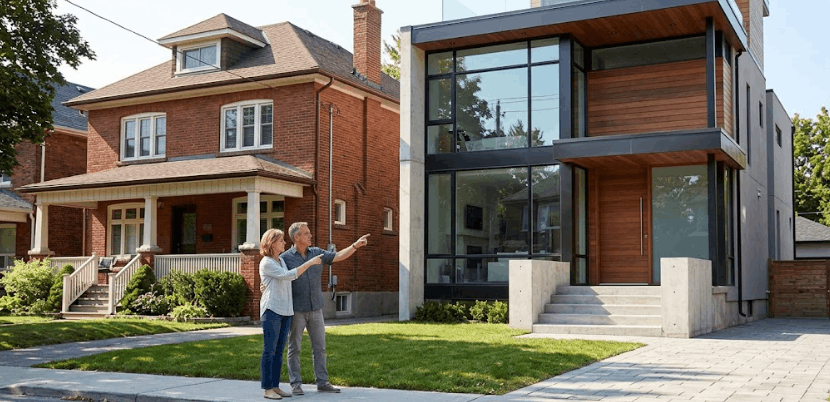

You hear the rumble of bulldozers two streets over, and your stomach drops. A new subdivision is going up, and your first thought is probably something like, “There goes my property value.” It’s a gut reaction I’ve encountered hundreds of times while working in real estate analysis. And honestly? That instinct is only half right.
The relationship between new construction and existing home prices is far more nuanced than most people realize. As of early 2026, the U.S. faces a shortage of roughly 1.2 million housing units, according to NAHB chief economist Robert Dietz. That deficit alone should tell you something: new homes aren’t simply flooding the market and tanking values. The picture is complicated, regional, and sometimes downright counterintuitive.
Here’s the short version: New construction can raise, lower, or have zero impact on your existing home’s value, and the outcome depends almost entirely on your local market conditions, proximity, and timing.
Page Contents
Why Homeowners Panic About New Developments (And Why They’re Often Wrong)
Fear sells. When a developer breaks ground nearby, homeowners imagine a worst-case scenario: identical shiny houses undercutting their older property. But the data tells a different story.
J.P. Morgan’s 2026 housing outlook projects U.S. home prices stalling nationally at around 0% growth. But that’s a national average. In the South and West, where a pandemic-era construction boom left a glut of new homes, prices are softening. Meanwhile, in the Northeast and Midwest, tight inventory keeps pushing existing home prices upward.
Here’s the kicker: the National Association of Home Builders reported in February 2026 that 65% of builders nationwide used sales incentives, and 36% cut prices by an average of 6%. New homes are actually competing harder for buyers than old homes in many markets. So if you own an existing home in a supply-constrained area, those new builds down the road might actually be helping you.
(Yes, you read that right.)
The “Halo Effect”: How New Construction Can Lift All Ships
Real estate professionals call it the “halo effect,” and it’s one of the most overlooked dynamics in residential markets. When new construction arrives, it typically brings infrastructure upgrades. New roads, better drainage, updated utility lines, retail shops, and sometimes entirely new schools. Those improvements don’t just benefit the new subdivision. They raise the appeal of the entire neighborhood.
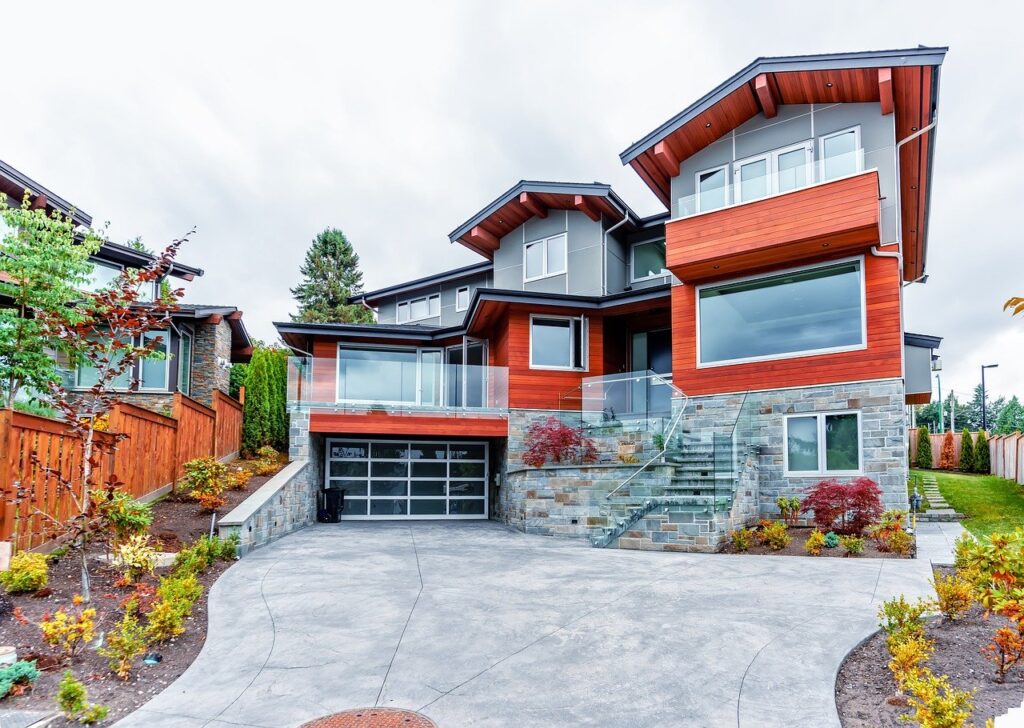
Think about it this way: a family moving into a new development still needs coffee shops, grocery stores, and parks. Those amenities attract businesses, which attract more residents, which drive demand for all housing nearby, including your 1985 ranch-style home.
A 2025 analysis from the Dallas Federal Reserve noted that housing accounts for 15 to 18 percent of the U.S. economy, connecting to many other sectors. When new construction stimulates economic activity in an area, the ripple effects touch everything from local employment to school funding. That’s good news for existing homeowners who ride the wave rather than fight it.
I’ve seen this firsthand in neighborhoods outside Austin and Nashville. Older homes within a mile of new master-planned communities saw property tax assessments rise, not because of the new builds themselves, but because the infrastructure improvements made the whole area more desirable.
Comparative Market Analysis (CMA): How Appraisers Actually View New vs. Old
When an appraiser evaluates your home, they’re not just looking at square footage and bedroom count. A Comparative Market Analysis considers recent sales of similar properties, adjustments for differences, and market conditions. Here’s where it gets interesting for older homes near new construction.
Appraisers make adjustments. If a comparable sale is a brand-new home, the appraiser adjusts downward for the “new construction premium.” If your older home has a larger lot, a mature landscape, or a more established neighborhood, those factors get adjusted upward. It’s not a simple “new beats old” equation.
What surprises most people is that established neighborhoods often carry intangible value that new developments can’t replicate. Mature trees, walkable streets, neighborhood character, and proximity to city centers matter. In fact, the NAHB’s 2026 data shows that the remodeling sector continues to thrive, with home improvement spending rising from 33% of residential construction in 2007 to 45% in the third quarter of 2025. Homeowners are investing in their existing homes because they recognize that value.
New Construction vs. Existing Homes: A Quick Comparison
| Factor | New Construction | Existing Homes |
|---|---|---|
| Modern Floor Plans | Open concepts, smart-home ready | Character, unique layouts |
| Proximity to Amenities | Often suburban, developing areas | Established shopping, dining, transit |
| Maintenance Costs | Lower initially (warranties) | Potentially higher, but negotiable |
| Lot Size | Typically smaller in 2026 | Often larger with mature landscaping |
| Price Trend (2025-2026) | Median prices down 2.32% YoY | Median prices up 3.38% YoY |
| Customization | Builder options, limited | Full renovation freedom |
The Eye on Housing blog from NAHB reported that new home prices have declined year-over-year for eight consecutive quarters through early 2025, while existing home prices rose for seven straight quarters. Builders are adapting to affordability challenges by building on smaller lots and constructing smaller homes. That dynamic actually creates a differentiation advantage for well-maintained older homes with larger lots and established neighborhoods.
When New Construction Actually Hurts Your Home Value
Let’s be honest: it’s not all sunshine. There are situations where new construction genuinely pressures existing home prices downward.
Oversupply in your micro-market. If builders flood your specific zip code with inventory that outpaces demand, the competition for buyers intensifies. This happened across parts of Texas and Florida in 2024-2025, where speculative construction during the pandemic era created more homes than the market could absorb. Housing starts fell 7.3% nationwide in 2025, with sharper declines in the South (8.3%) and West (10.7%).
Direct competition at your price point. If new homes are being offered at or below your home’s asking price, and they come with warranties, modern finishes, and builder incentives like mortgage rate buydowns, you’ll feel the squeeze. A real estate negotiation strategy becomes essential in this scenario.
Disruption during construction. Noise, dust, heavy truck traffic, and months of visual clutter can temporarily suppress buyer interest in your neighborhood. This is usually short-lived, but it matters if you’re selling during that window.
The Numbers That Matter Right Now
The 2026 housing market offers a fascinating case study. J.P. Morgan expects national home prices to stall at 0% growth, with regional variations telling the real story. The existing home inventory has risen from a cyclical low of 2.3 months’ supply in 2021 to 4.1 months in 2025, and is projected to hit 4.6 months in 2026, approaching a balanced market.
For existing homeowners, this means the extreme seller’s market is fading, but it doesn’t mean values are crashing. It means smarter preparation matters more than ever. Understanding your local market dynamics, knowing how appraisers view your property relative to new builds, and investing wisely in your home are the strategies that protect your equity.
If you’re considering selling an older home near new construction, focus on what new homes can’t offer: established community, mature landscaping, proven structural integrity, and often superior location relative to city centers and employment hubs.
How to Protect Your Home’s Value Near New Developments
Rather than panicking about the bulldozers, take action. Here’s what works:
Get a professional CMA from a local agent who understands the micro-market. Not a Zillow estimate. An actual analysis of how recent new construction sales compare to existing homes in your area.
Invest in strategic upgrades that close the gap between your home and new builds. Kitchen and bathroom renovations, energy-efficient windows, and smart home features are high-ROI improvements that appraisers notice.
Monitor builder incentives in your area. If builders are offering rate buydowns and price cuts, understand what that means for your competitive position. Sometimes it means they’re struggling, which actually indicates weakening new-home demand, not weakening values for your existing home.
Understand the mortgage rate landscape. NAHB expects mortgage rates to remain slightly above 6% through 2026, with sub-6% rates unlikely before 2027. That lock-in effect continues to constrain existing home inventory, supporting prices for homeowners who do decide to sell.
FAQs
Does new construction lower nearby property values? Not automatically. In many cases, the infrastructure improvements that accompany new developments actually raise property values for existing homes within a 1-2 mile radius. The outcome depends heavily on local supply-and-demand dynamics.
Should I sell my home before new construction is completed nearby? Usually no. Construction disruption is temporary, and once new amenities open, your area often becomes more attractive. Selling during active construction can mean accepting a discount you’ll regret.
How do appraisers handle new construction comparables? Appraisers adjust for the “newness premium” when using new-build sales as comparables. They also credit existing homes for advantages like larger lots, mature landscapes, and established locations.
Will new apartments or condos affect my single-family home value? Multifamily construction can increase demand for nearby services and amenities. NAHB projects multifamily starts to decline to 392,000 units in 2026, so oversupply risk is actually decreasing.
Are existing homes appreciating faster than new homes in 2026? Yes. Existing home prices rose 3.38% year-over-year through early 2025, while new home prices fell 2.32% over the same period. Builders are cutting prices to move inventory, while existing home supply remains tight.
What’s the best strategy for homeowners near new developments? Focus on differentiation. Invest in upgrades that highlight what new homes lack: character, established neighborhoods, larger lots, and proximity to employment centers.
The Bottom Line
After following residential markets for years, here’s what I’ve learned matters most:
First, new construction is not the enemy of your home value. In most scenarios, it’s either neutral or mildly positive.
Second, your micro-market is everything. National trends don’t determine what your specific home is worth. Local supply, demand, and the type of new construction all matter far more than headlines.
Third, the homeowners who protect their equity aren’t the ones who panic. They’re the ones who understand their competitive position, invest strategically, and work with professionals who know the local landscape.
Whether you’re sitting on a first-time buyer property or a long-held family home, new construction in your area is a signal to pay attention, not to panic. The data overwhelmingly shows that informed homeowners come out ahead.