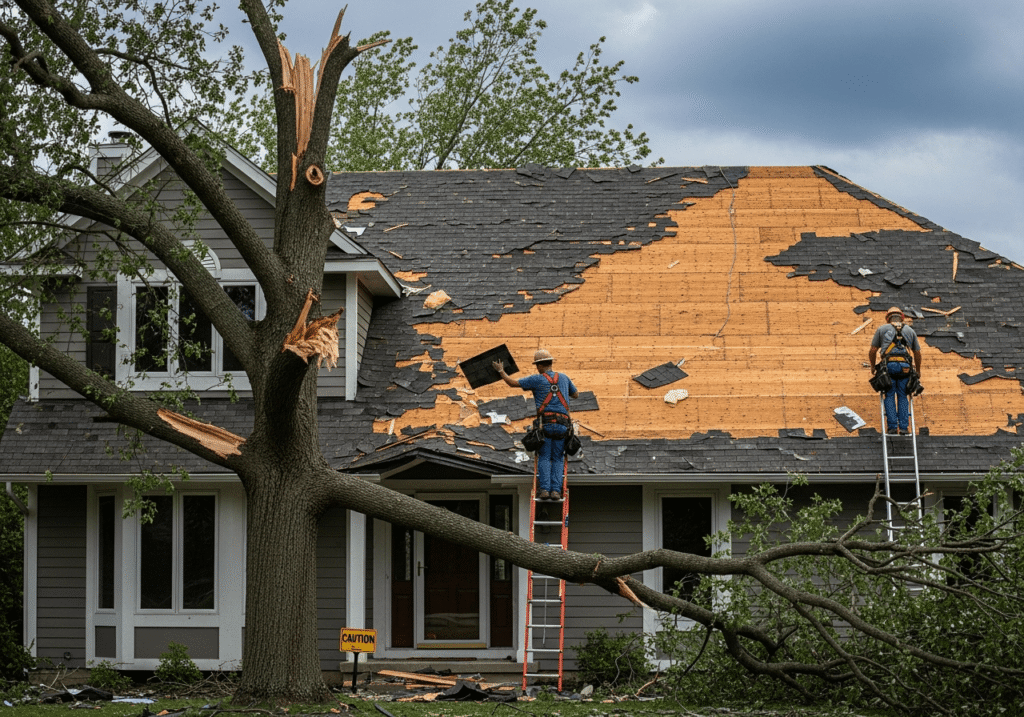

When the storm strikes Melbourne, it is common to find your roof being the first section of your house to be hit. Powerful gusts, solid rain, hail and falling trees are all causes of unforeseen damages that expose your property to danger. Regardless of the extent of the damage, it is imperative to understand what to take first after the occurrence in order to save your house, prevent any additional structural complications and secure the safety of your family.
Roof problems caused by storms can develop in a short time and thus in the event of such a problem, doing the appropriate thing early matters a lot. This is a full-time guide on the idea of what Melbourne homeowners ought to do within a primary following the storm harm before, during and following the organization of roof repair in Melbourne.
Page Contents
1. Assess the Damage – Safely and Carefully
When the storm has subsided, and you are able to venture forth, the first thing you need to do is to determine the damage, however, caution must be taken. Never mount the roof as it is not always stable or safe. Alternatively, look through the ground with the help of binoculars.
Look for:
- Missing or broken shingles or tiles.
- Free-flowing flashing of chimneys, skylights or vents.
- Debris lodged on the roof
- Sagging sections
- Gutter damages or dislodgement.
- Stains of water on ceilings of your house.
When water already passes inside, take photographs and empty the valuables in order not to damage the same.
2. Protect Your Home from Immediate Water Damage
When the roof is leaking, it is necessary to take immediate actions to reduce the effects. Buckets, towels or containers should be used to cover furniture or electronics with plastic sheets and leaks should be placed under.
Outdoors, when the weather permits, you can improve the use of a tarp to cover the region which is damaged– but not in unsafe cases. A short-term fix is not a permanent solution, however, it can mitigate internal harm until the professionals arrive.
It is also here that the knowledge of emergency roof repairs what to do when your roof springs a leak can be of value as action is timely taken; this can limit the growth of the mould and the collapsing of the ceiling and the danger of electric shocks.
3. Contact Local Roofing Professionals
After getting the situation as steady as you can, get yourself local roof repair professionals on the phone. The weather of Melbourne may be unpredictable and the damage may increase with the following precipitation.
Reliable roofers will:
- Use an extensive roof check up.
- Determine latent or underlying problems.
- Provide a written quote
- Provide temporary protective services, when necessary.
- Help in filing insurance.
- Recommend long term repair or replacement.
By selecting local personnel, one will be able to make sure that they have knowledge about the climate in Melbourne, roofing materials that are mostly utilized there, and have knowledge about the building code.
4. Document Everything for Insurance Claims
Insurers demand documentation about storm damage and thus it is important to document properly.
Make sure to gather:
- Clearly captured images of external and internal damages.
- Videos of leaks or drips
- Accounts of the way things happened.
- Receipts on temporary repair measures.
- Roofing professionals quotes.
There are those insurers who might send an assessor and others may depend on the inspection report of your roofer. The better you present yourself and specialization, the faster your claim can be given.
5. Avoid Delaying Repairs
Cracks and missing tiles even when small may cause serious problems in the long run. The weather of Melbourne can change fast between sunny and hot to rainy and windy, so it leaves your home at a disadvantage in case you are late in repairing it.
The risks associated with delayed repairs are potential to be long-term and may include:
- Structural timber rot
- Ceiling collapse
- Mould and mildew growth
- Higher repair costs
- Electrical hazards
- Reduced property value
Damage caused by storms seldom corrects itself, and only gets worse.
6. Understand the Repair Options
One or more of the following may be required depending on the degree of the storm damage:
General Roof Repairs
The replacement of tiles, repairing of flashing, sealing of leaks or re-fitting roofing sheets.
Gutter and Downpipe Repairs
In many cases, they are broken when there are serious storms and in conditions of correct drainage.
Roof Restoration
In the case where the storm has aggravated the existing wear and tear then a complete restoration could be advised.
Roof Replacement
The severe structural damages or an aged structure with a weak roof can be replaced in totality and safety.
Your roofing professional will assist in deciding on the best and most efficient solution that will be cost effective and durable.
7. Prepare for Future Storms
Prevention is significant after the damage is fixed. By following the following practices, Melbourne house owners can offer their roofs greater protection:
- Either clean gutters twice per year.
- Pruning of hanging branches.
- Arranging roof checks on an annual basis.
- Inspecting loose tiles prior to the storm season.
- Checking ventilation of roof.
Regular repairs minimize the chances of significant destruction whenever the event of another storm occurs.
Final Thoughts
Storms are unpredictable but your reaction should not be. In response, acting fast, recording all this and calling reputable people, you can make the damage as minimal as possible and rebuild your home without any harm. The damage of the roof can be overwhelming, yet with the proper approach and the help of the professional, you can restore the value of your property to its original state and improve its security in the future.
Should you not be quite sure of your starting point, bear in mind that there are professional local roof repair experts who will always be more than willing to assist you in maneuvering around the repair process in the most safe and efficient way possible. They will leave you carefree and your house safe even following a severe Melbourne storm.


Pingback: Aluminium Pergola Designs That Instantly Upgrade Your Outdoor Living Space
Pingback: 7 Ingenious Techniques to Find Hidden Water Leaks In Your Property Without Causing Damage